

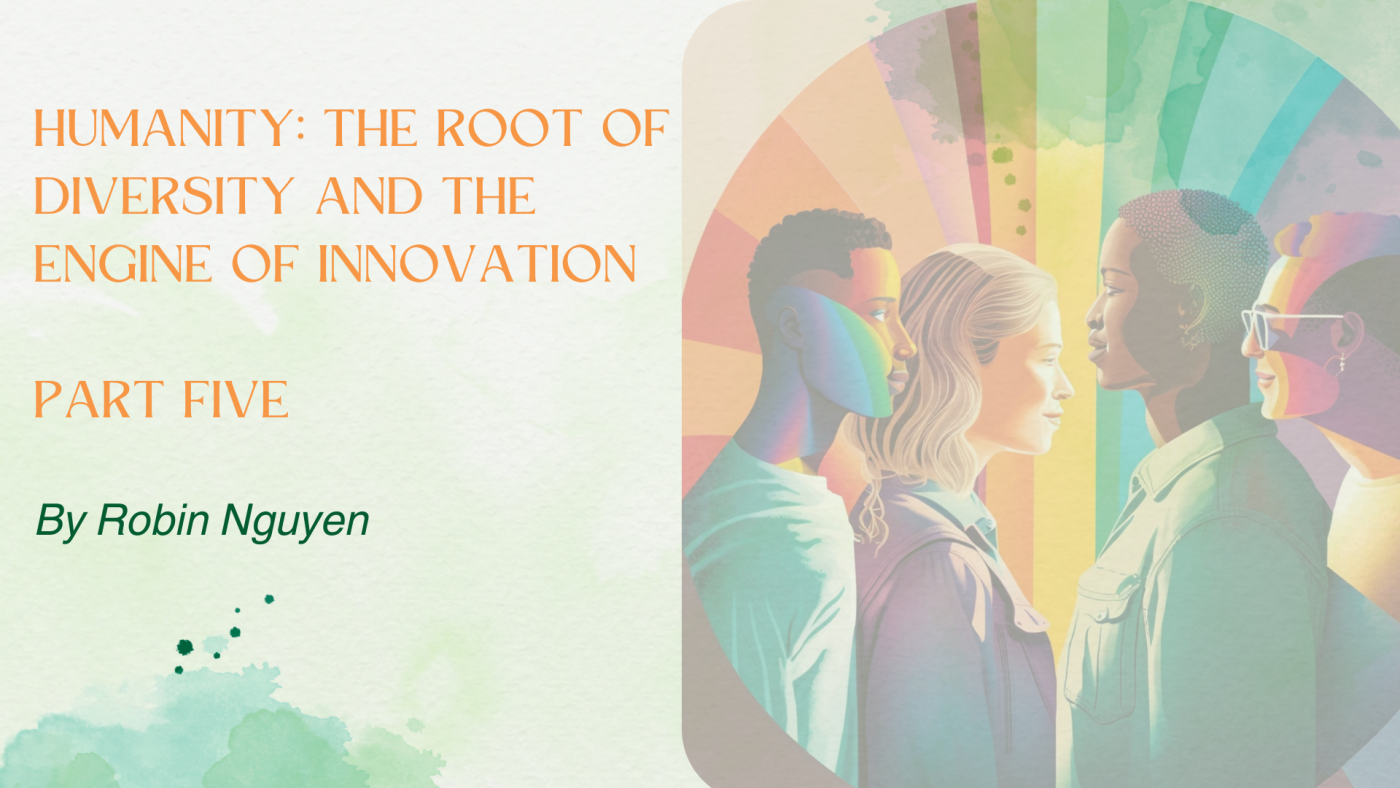
Humanity: The Root of Diversity and the Engine of Innovation
“Many corporations today emphasize diversity in the workplace and society, recognizing its link to innovation and economic growth. Yet, implementation often falls short because we forget one essential truth: real diversity is rooted in humanity, real innovation serves humanity!” Robin Nguyen
Part 5: We are not Truly Different; We Only Make Ourselves Appear So
I have visited many cities around the world, including ancient, highly developed centers in Asia and Europe. At first glance their architecture looks different, but the underlying patterns are similar—universal and natural forms translated through different cultures. If we look back at how humans learned from nature, we see that we are all composed of earth, water, fire, and air. We eat food grown from soil and water and nourished by sunlight; these elements feed and sustain us, and one day we will return to the same source.
Because of geography and culture we may look different and think, speak, and feel in different ways. Yet we share the same empathy and the same desire to grow and to seek happiness.
Every country and region has strengths that can help connect us and build a better world. For example: U.S. technology and China’s construction strength may be steadied by Vietnam’s mature empathy or Japan’s innovation and Russia’s energy might be harmonized by Kenya’s quiet resilience! The problem arises when some places consider themselves superior to others, which leads to discrimination and conflict.
Diversity is like a band: singers alone cannot create harmony—we also need guitarists, pianists, and violinists. Cultural variety makes the melody richer, more beautiful, and more complete.
The world needs harmony, yet too often people focus only on differences. We are not truly different—we only make ourselves appear so. If we view diversity through the lens of nature, we become more empathetic, better listeners, and more adaptable—qualities essential for fostering every voice within an organization.
True inclusion is not achieved through rigid structures or persuasion but through genuine understanding and care. As Thich Nhat Hanh beautifully expressed:
“When you plant lettuce, if it does not grow well, you don’t blame the lettuce. You look for reasons it is not doing well. It may need fertilizer, or more water, or less sun. You never blame the lettuce. Yet if we have problems with our friends or family, we blame the other person. But if we know how to take care of them, they will grow well, like the lettuce. Blaming has no positive effect at all, nor does trying to persuade using reason and argument. No blame, no reasoning, no argument—just understanding. If you understand, and you show that you understand, you can love, and the situation will change.”
Author: Robin Nguyen